Advanced systems engineering research unit

Systems thinking and collaboration for the value creation of the future

An excerpt from an interview with Roman Dumitrescu, Harald Anacker and Arno Kühn

The Product engineering research unit is focused on interdisciplinary, technology-driven development that takes the entire innovation process into account — from strategic planning right through to a successful launch on the market. Director Roman Dumitrescu and Division Manager Arno Kühn and Harald Anacker explain how companies can meet the challenges of climate change, the pandemic and geopolitics though systems thinking and collaboration.

Why should companies place product engineering high on their list of priorities?

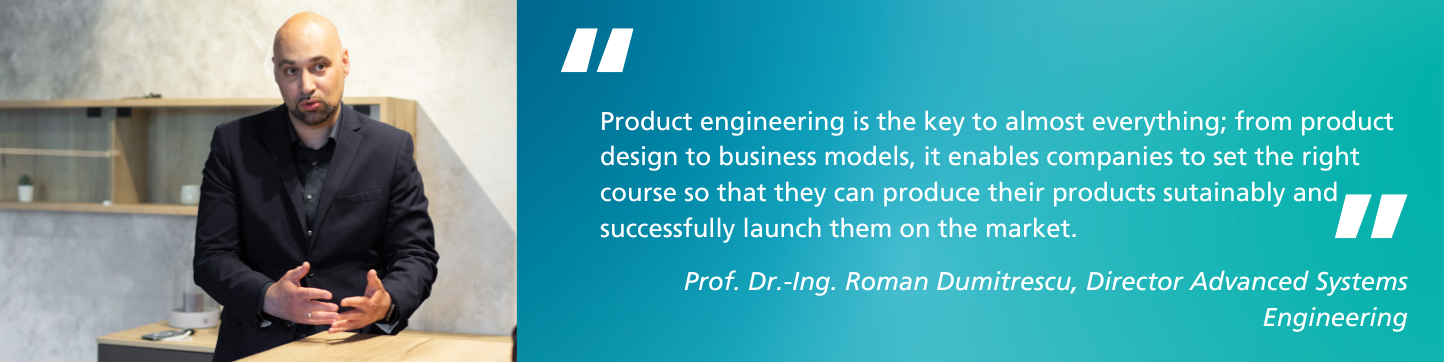
Roman Dumitrescu: Product engineering is the key to almost everything; from product design to business models, it enables companies to set the right course so that they can produce their products sustainably and successfully launch them on the market. Our task is to provide methods and technologies to support companies in this essential work. In order to bring together experts from all the different disciplines, it’s essential that companies apply systems thinking and utilize systems engineering methods. This will enable them to start thinking about the associated value creation chain early on in the product engineering process.
Arno Kühn: We don’t just see the digital transformation as a challenge — it’s also a vital source of solutions! For example, IT systems can support complex processes, and smart data collection can optimize production machinery. The digital transformation affects the entire company, from engineering to production and beyond.

The challenges facing the industry sector are more dynamic and diverse than ever. What advice do you have for your partners here?

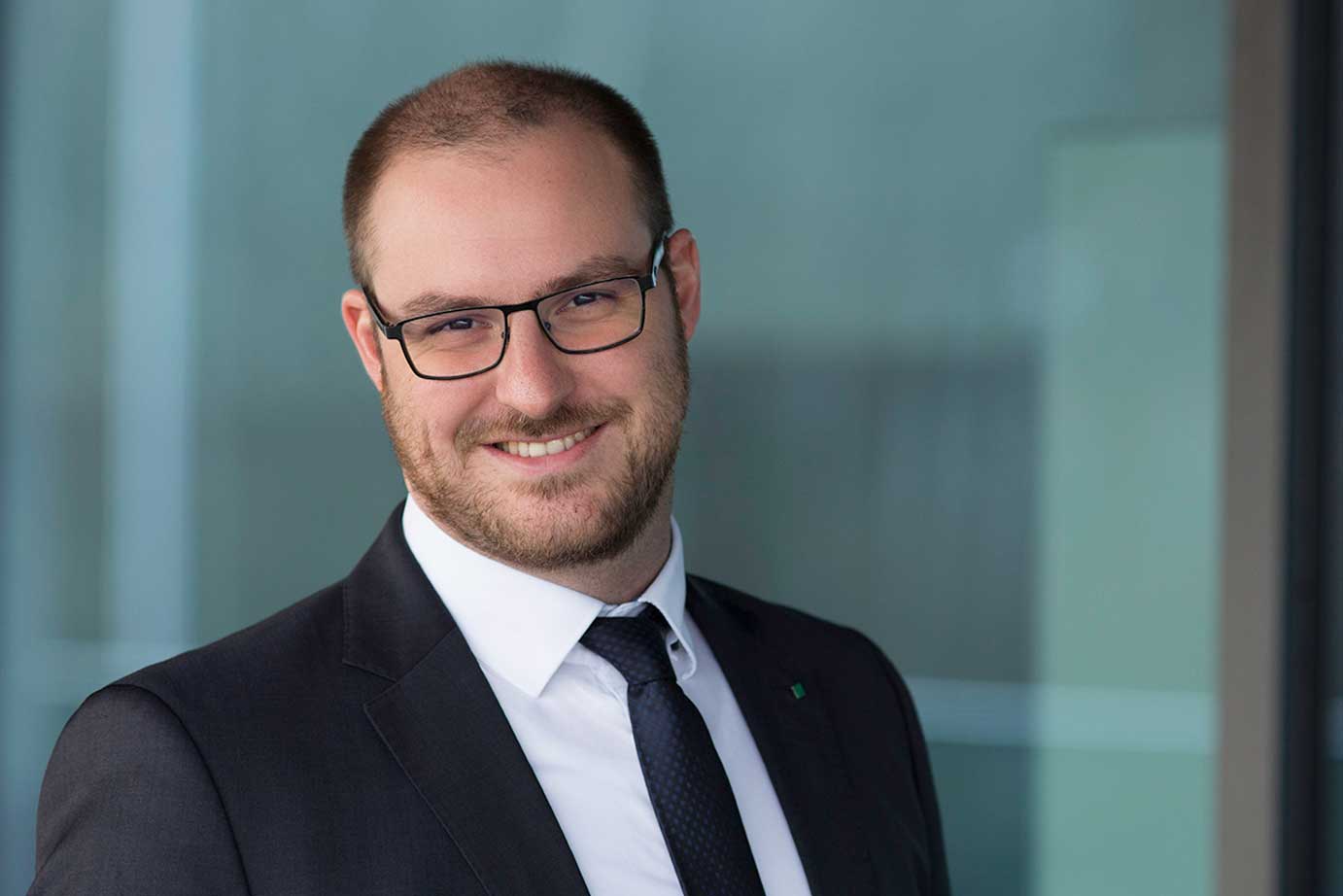
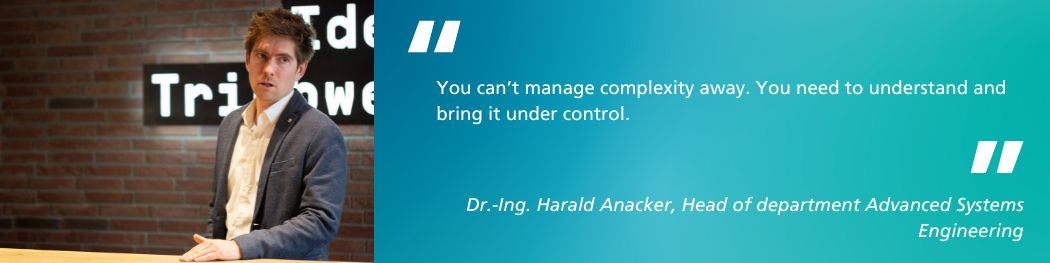
Harald Anacker: First and foremost, we encourage them to apply systems thinking. Companies need to systematically integrate this approach throughout their entire organization, so that the effects of each individual’s actions become transparent. You can’t manage complexity away. You need to understand and bring it under control. For example, what effect does choosing certain materials or designs have on sustainability or supply chains? What are the opportunities and risks associated with choosing a particular location for production? Being able to conduct our lives and business in a secure environment is no longer something we can take for granted. Systems engineering methods can help with all these considerations.

Zitat von Dr.-Ing. Harald Anacker
© Fraunhofer IEM

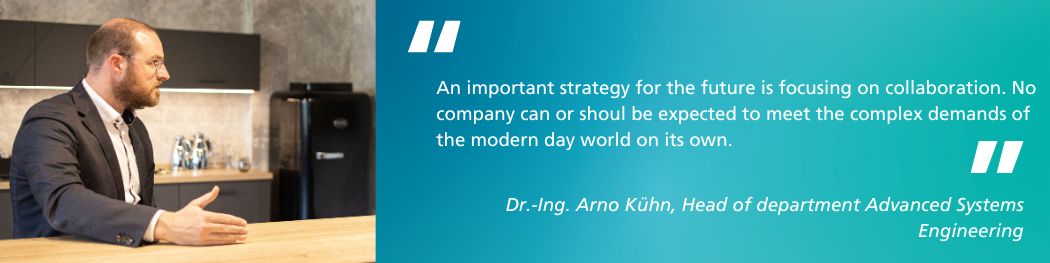
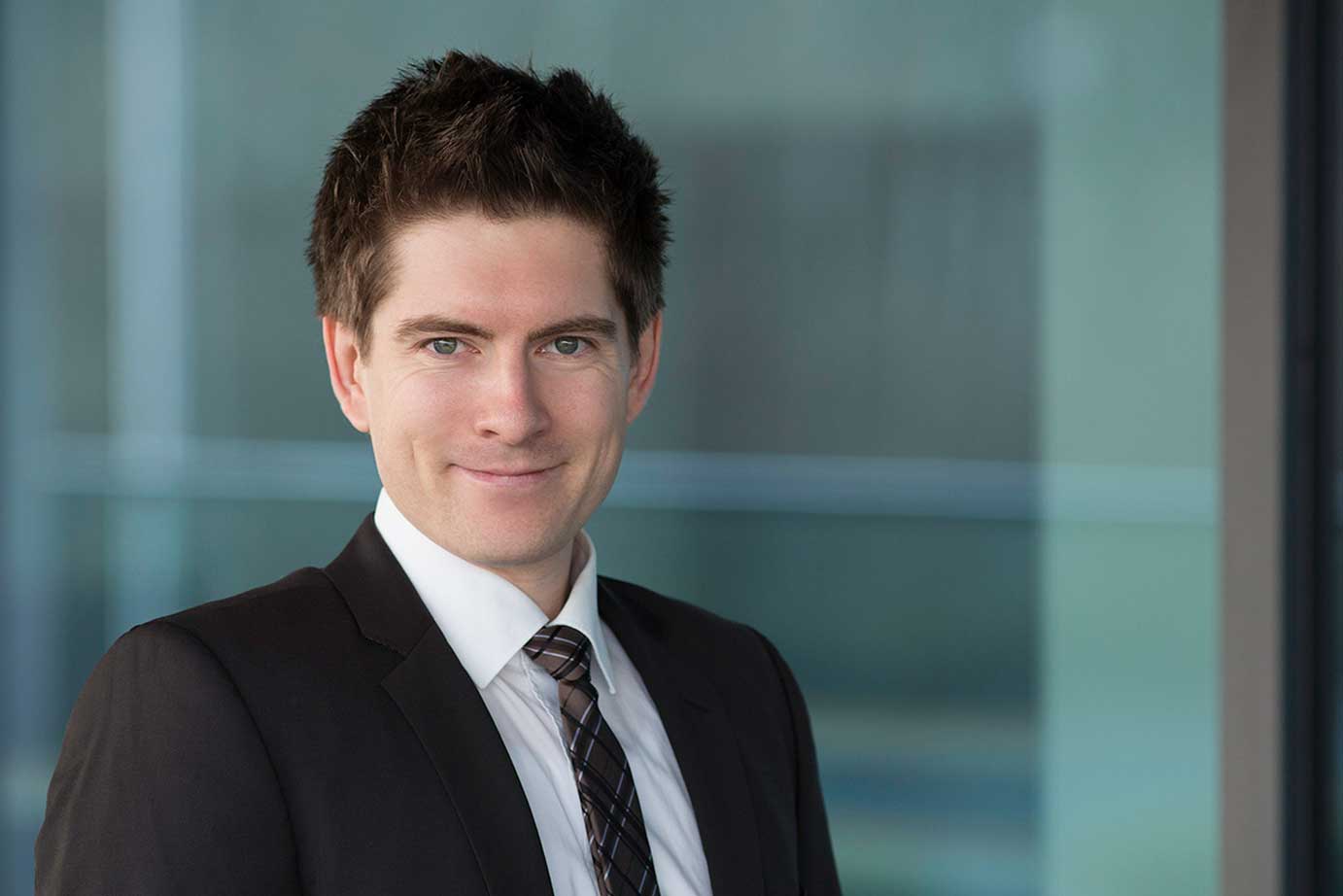
Arno Kühn: Another important strategy for the future is focusing on collaboration. No company can or should be expected to meet the complex demands of the modern-day world on its own. Cross-company collaboration is also a solution to the tricky issue of skilled worker shortages — companies are struggling to find qualified experts these days, and it’s very difficult for SMEs in particular to recruit people with technology and digitalization expertise.

Collaboration can take different forms, from working together in an innovation cluster such as the “it’s OWL” network, to the further education and training courses we offer at the Fraunhofer IEM Academy, right through to new collaboration models that ensure industry companies always have access to the latest research knowledge. Last but not least, having a company culture of positivity and willingness to adapt to change is just as important as having specialist knowledge.

Zitat Dr.-Ing. Arno Kühn
© Fraunhofer IEM

How does sustainability — the problem of the century — affect product engineering?

Roman Dumitrescu: If you’re going to take this topic seriously, you need to develop a vision for sustainability at your company that covers all possible dimensions. The product engineering process and our system-focused approach gives companies a radical insight into the consequences of their own business models. Our studies have shown that well over 90 percent of industry companies’ greenhouse gas emissions come from the downstream processes in their supply chains, e.g. the next customers in the chain. So in order to be sustainable, we need to radically change how we think, act and do business.

Looking to the future, what does your research unit have planned for the coming months?

Harald Anacker: First of all, we want to make our own calls for greater collaboration a reality, starting with our own institute: Our new IoT Xperience Center at Zukunftsmeile 2 is the ideal environment for collaborating with companies in order to bring topics like connected industry and 5G to life. The IoT Xperience Center is there to represent a number of labs and events that have not yet attracted the attention they deserve due to the pandemic. We want to make up for lost time.

Strategic product and business design research groups

Bunte Papierkugeln am Rand und eine gelbe Kugel in der Mitte, die wie eine Glühbirne aussieht.
© vegefox.com / Adobe Stock

Innovation engineering

In the innovation engineering group, we develop strategies, methods and tools to convert the innovation potential of digitalization into products, services and business models. In particular, we focus on identifying and evaluating new technologies, developing innovations in an agile, customer-centric manner and on the shift to data-driven services and business models. With innovative formats such as the corporate makeathon, we foster enthusiasm and inventiveness so that the team can develop solutions away from the core business environment.

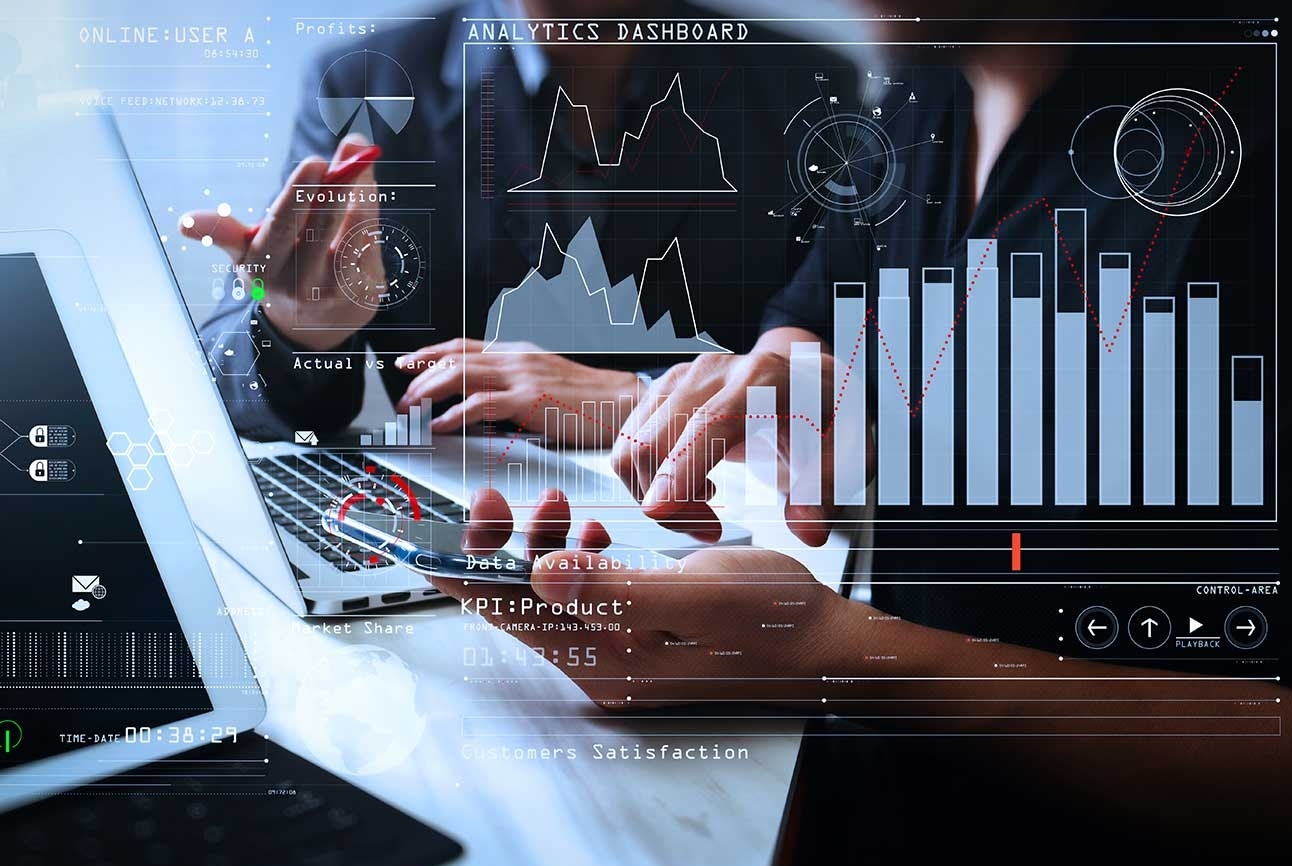
Hände an PC und Handy, darüber ist ein Analytics Dashboard eingeblendet.
© everythingpossible / Adobe Stock

Production management

The production management group researches and develops approaches for the successful design of production and value creation systems. One area of focus is intelligent data analysis in the context of production. The basis for this is the systematic introduction of industrial information and communication technologies and the comprehensive development of data sources for the purposes of Industrie 4.0. By successfully applying methods from machine learning and data analytics, previous processes can be optimized and untapped potential for value creation can be harnessed.

Business-Personen sitzen am Flat Table und halten ein Meeting.
© Rawpixel.com / Adobe Stock

Business configuration

Digitalization is altering the foundations of every company in terms of its strategies, structures, processes and culture. In the business configuration group, we develop approaches and methods for shaping digital transformation in a successful way. Our activities range from the development of customized digitalization strategies and the optimization of value creation processes and structures right through to the design of digitalized working environments.

Systems engineering department

The digitalization-driven shift from mechatronic systems to globally distributed systems that communicate with each other and with people via the internet and operate as a network offers a wealth of potential for innovation. Key development challenges are the increased interdisciplinarity and complexity of the systems themselves. The Systems Engineering department is concerned with the central question of how these complex systems can be developed efficiently. Systems engineering is at the heart of the approach. Methods and means of expression are devised to bring together experts from all fields of study. Key topics are system analysis, modular architectural design, the integration of mechanical and electrical functions or the design of innovative combinations of material and services. The department also examines how digital technologies such as augmented and virtual reality are changing everyday product development work.

Systems engineering research groups

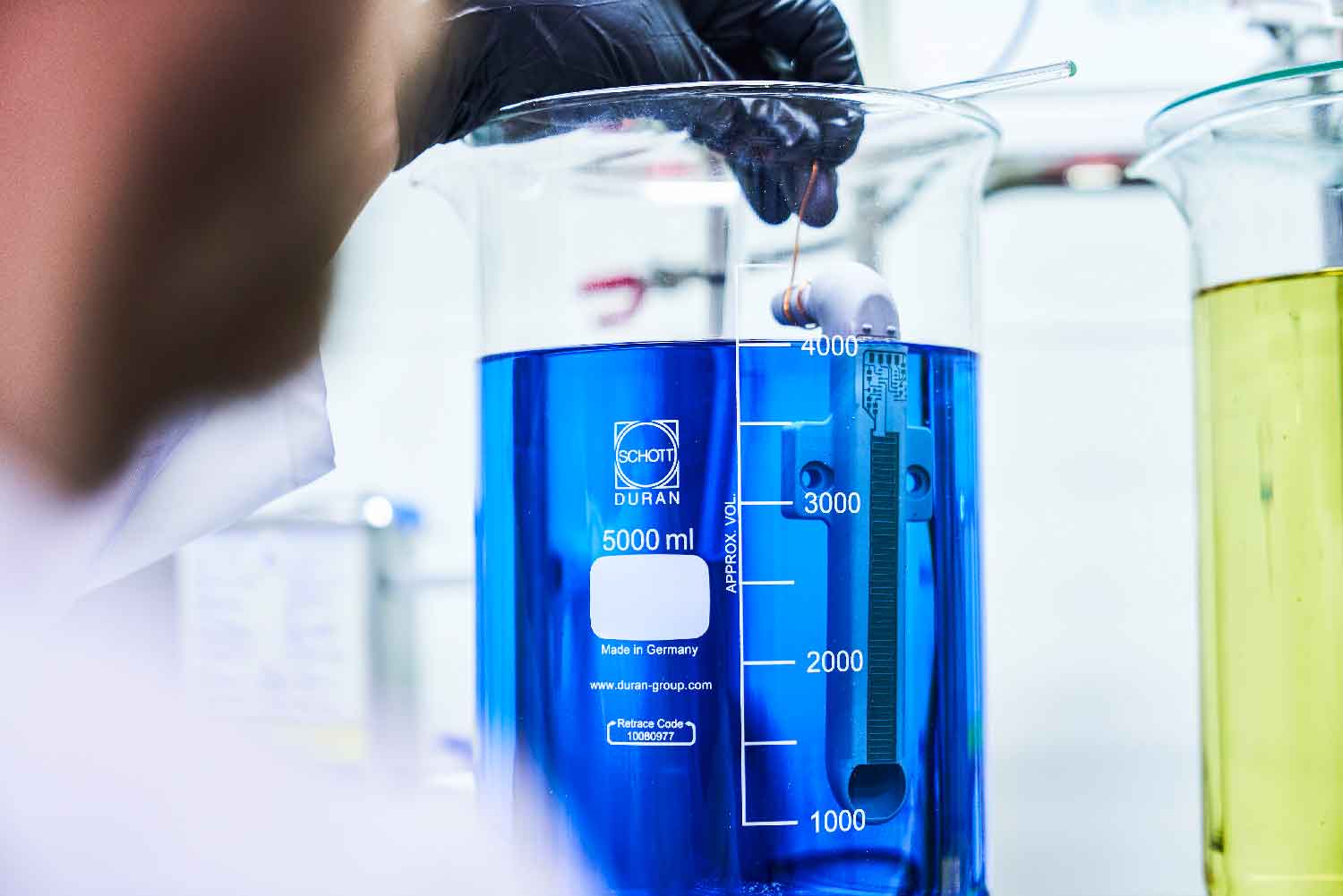
Mann im Labor, der ein 3D-gedrucktes MID-Teil in ein Tauchbad senkt.
© Fraunhofer IEM / Wolfram Schroll

Integrated mechatronic systems

In the integrated mechatronic systems group, we develop strategies, methods, tools and prototypes that are enablers for the Internet of Things. The focus is on spatially integrated products that are characterized by enhanced intelligence and an increasing degree of networking. By tapping into technology potential, e.g. for additive manufacturing, the starting point is established — from empowerment and design to joint prototype development. Significant emphasis has been placed on linking generative and selective metallizing manufacturing technologies.

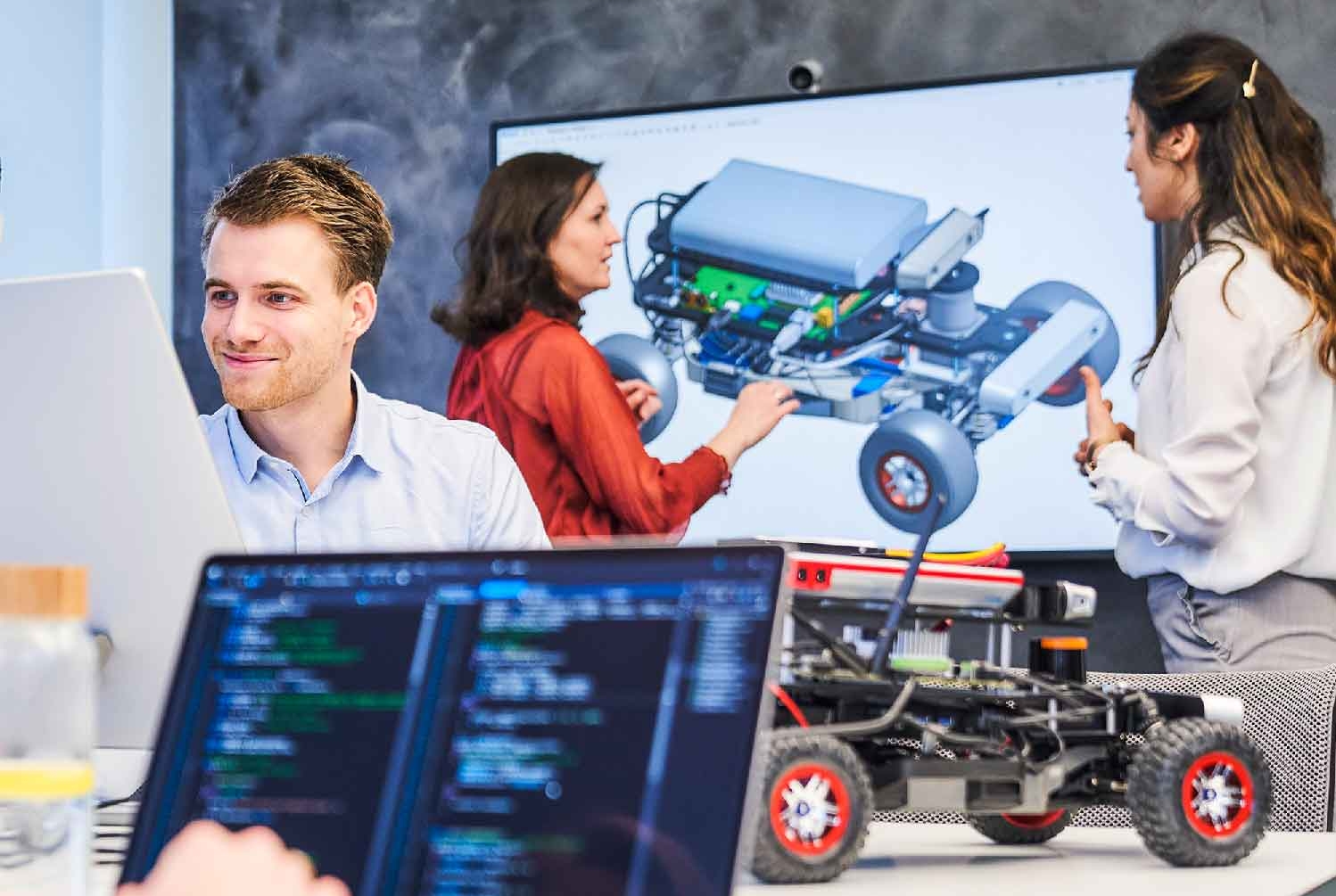
Vier Personen im SE Live Lab, von denen sich zwei Frauen über ein CAD-Modell austauschen.
© Fraunhofer IEM / Wolfram Schroll

Digital product engineering

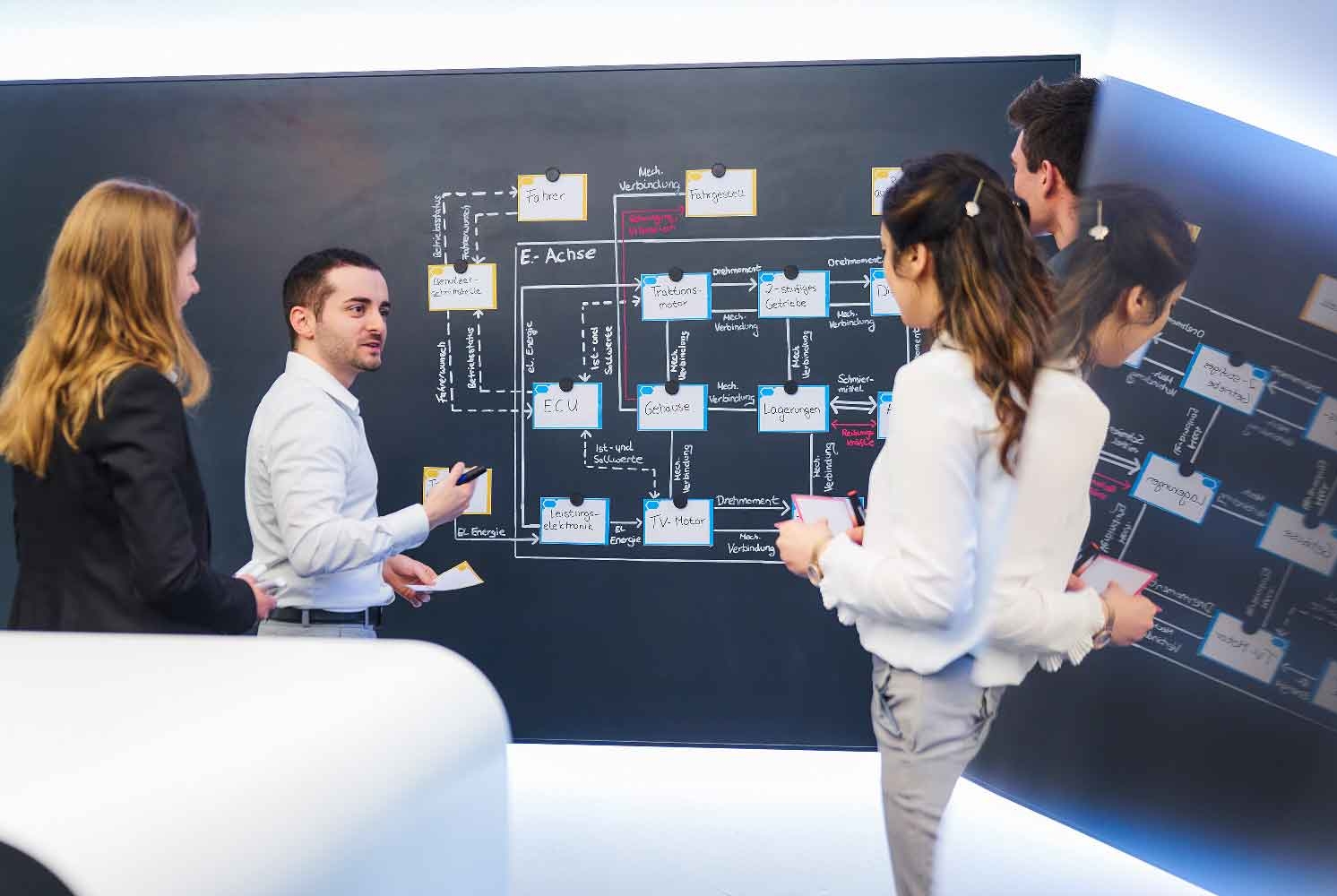
Thanks to specialized software tools, the digitalization of the product creation process continues to progress within the specialist disciplines. However, interdisciplinarity and mastery of product complexity can only be achieved through Model-Based Systems Engineering (MBSE). In the digital product engineering group, we pursue the objective of end-to-end digital product engineering, taking into account industry-specific requirements. This covers topics such as digital twins, the use of artificial intelligence methods in product engineering, product lifecycle management and end-to-end tool chains.

Vier Personen im SE Live Lab, die am Blackboard CONSENS modellieren.
© Fraunhofer IEM / Wolfram Schroll

Engineering management

The complexity associated with the development of intelligent technical systems (e.g. autonomous networked vehicles, product service systems, etc.) is growing exponentially. Existing methods, processes, tools and organizational forms are not capable of meeting heightened requirements. In the engineering management group, we work on new approaches to support the systems architects of tomorrow and on rolling out systems engineering in companies. This includes, but is not limited to, training concepts, role and task design, raising awareness and communication strategies.

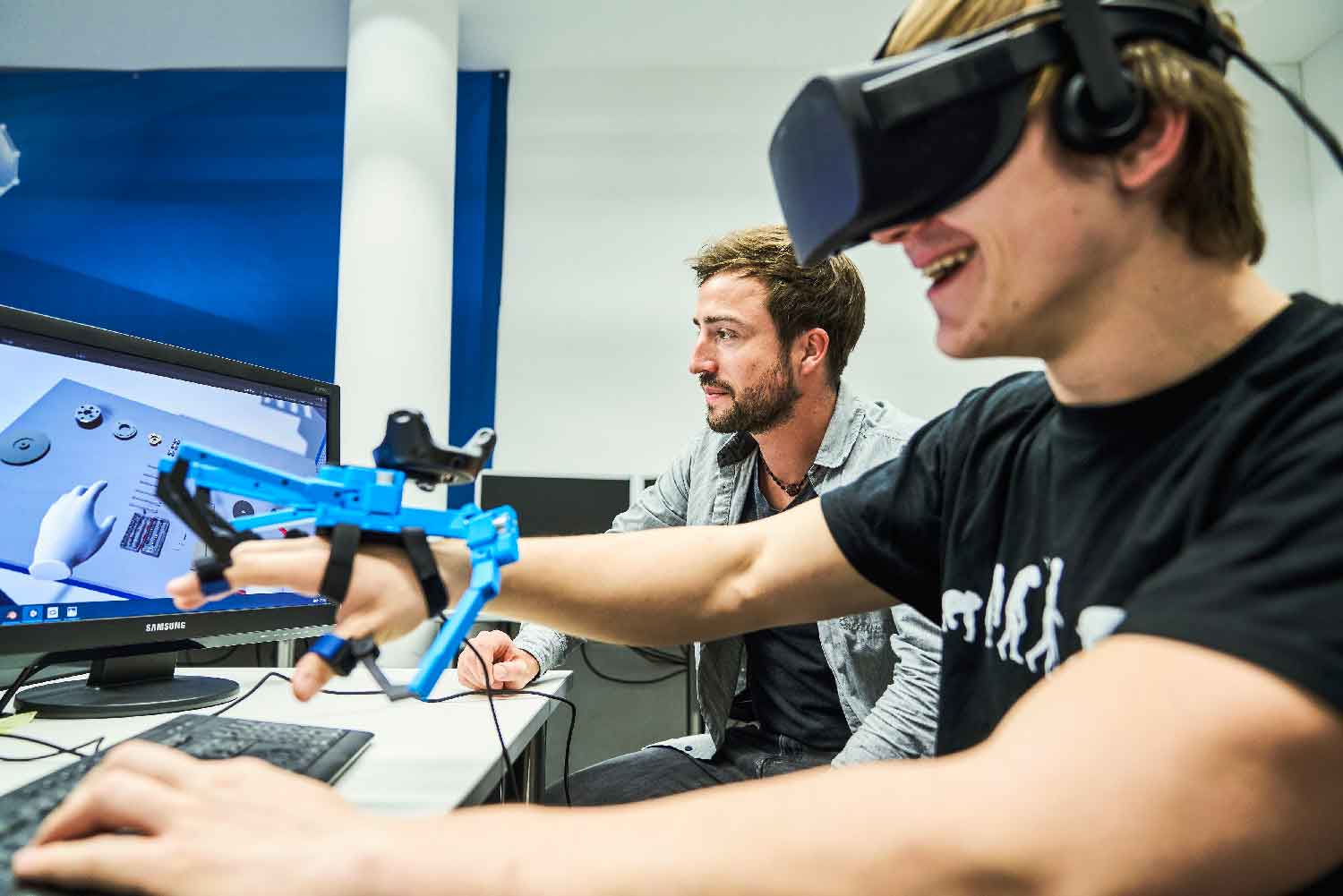
Zwei Männer sitzen im AR VR Lab und testen einen VR-Handsschuh.
© Fraunhofer IEM / Wolfram Schroll

Augmented and virtual reality

Augmented and virtual reality are innovative technologies that are increasingly finding their way into the industrial sector. We design intuitive user interfaces at every stage of the product development process. With our partners, we explore new use cases and implement them using the latest hardware. For us, technologies are a means to an end. With a systematic approach, we analyze the usage requirements and use them to implement user-centered visualization and interaction solutions.

Labs and testing facilities


AR/VR Lab

Immerse yourself in the fascinating possibilities that augmented and virtual reality have to offer.


IdeenTriebwerk

Promote innovation in the inspiring working environment of the IdeenTriebwerk.


MID Lab

Discover the application areas of molded interconnect devices (MIDs) in combination with 3D printing.


Systems Engineering Live Lab

Develop technical systems and intelligent products through interdisciplinary collaboration.

Selected publications concerning product development.

A full list of our publications can be found here.

2022

Merkelbach, S.; Enzberg, S.; Kühn, A.; Dumitrescu, R.: „Towards a Process Model to Enable Domain Experts to Become Citizen Data Scientist”, 5th IEEE International Conference on Industrial Cyber-Physical Systems (ICPS 2022), 24.-26. Mai 2022, Online
Kürpick, C.; Dumitrescu, R.; Falkowski, T.; Fechtelpeter, C.; Kühn, A.: Digitalization and Sustainability in Strategic Management: Research Agenda toward Dual Transformation. IEEE ICE IAMOT, Nancy, Frankreich, 2022
Förster, M.; Kürpick, C.; Hobscheidt, D.; Kühn, A.; Dumitrescu, R.: Cross-industry methods for strategic planning of the digital transformation of small and medium sized enterprises, Procedia CIRP, 32th CIRP Design Conference, March 2022, Gif-sur-Yvette, France
Joppen, R.; Kühn, A.; Förster, M.; Dumitrescu, R.: Evaluation of Industry 4.0 applications in production, Journal of the Knowledge Economy, 2022

Got any questions or requests? Please get in touch!

Roman Dumitrescu

Contact Press / Media

Prof. Dr.-Ing. Roman Dumitrescu

Director Advanced Systems Engineering

Fraunhofer Institute for Mechatronic Systems Design IEM
Zukunftsmeile 1
33102 Paderborn

Phone +49 5251 5465-124

Arno Kühn

Contact Press / Media

Dr.-Ing. Arno Kühn

Division Manager Advanced System Engineering

Fraunhofer Institute for Mechatronic Systems Design IEM
Zukunftsmeile 1
33102 Paderborn

Phone +49 5251 5465-323

Harald Anacker

Contact Press / Media

Dr.-Ing. Harald Anacker

Division Manager Advanced Systems Engineering

Fraunhofer Institute for Mechatronic Systems Design IEM
Zukunftsmeile 1
33102 Paderborn

Phone +49 5251 5465-324